
In recent years, the conversation around intimacy and sexual wellness in marital life has shifted dramatically, and one topic making its way to the forefront is the growing use of sex toys among couples. Once considered a taboo subject, sex toys are now widely accepted as tools for enhancing intimacy, boosting sexual satisfaction, and strengthening emotional bonds between married partners. With the global sexual wellness market projected to reach billions of dollars in the coming years, it’s clear that more couples are openly exploring ways to improve their love lives. But what does this emerging trend really mean for marital relationships? Does incorporating sex toys into a marriage lead to greater connection and happiness, or does it create new challenges?
In this blog, we’ll take an honest, judgment-free look at the effects of sex toys on marital life — including the potential benefits, common concerns, and expert-backed insights every couple should know.
From Ancient Secrets to Modern Shelves: The Surprising History of Sex Toys
Imagine archaeologists carefully brushing dust off a 28,000-year-old stone object in a German cave — only to realize they had just uncovered one of humanity’s oldest sex toys. Shocking? Perhaps. But this discovery is proof that the desire for sexual pleasure and enhancement is as old as humanity itself. Sex toys are not a product of the Instagram age or the Netflix era. They have quietly existed for centuries, hidden in the folds of history across different cultures and civilizations. What has truly changed today is not their existence — it is the fact that people are no longer whispering about them.
The Quiet Revolution Happening in Bedrooms Around the World
Walk into any major pharmacy, scroll through any e-commerce platform, or simply glance at social media — sex toys are everywhere. Sales figures from leading manufacturers and retailers confirm something remarkable: people of all genders, ages, and backgrounds are buying and using sex toys at record rates, and that number keeps climbing. This is no longer a conversation happening only in the shadows. Across the Western world, especially, people of all sexual orientations are openly embracing these products as a normal, healthy part of their intimate lives. A quiet revolution is unfolding — one bedroom at a time.
The Other Side of the Story: What Nobody Tells You About Sex Toys
Every trend has two sides. Although the world has become increasingly vocal about the benefits of sexual wellness products, there is a quieter, less glamorous conversation that deserves equal attention. Because the truth is — sex toys, like any powerful tool, come with risks. Ignoring those risks does not make them disappear. It just leaves people unprepared. So, let’s talk about what the glossy advertisements and influencer endorsements often leave out.
1. The Hidden Danger Hiding Inside Your Toy
Imagine this: you carefully search a sex toy, read the reviews, compare the prices, and finally make your purchase — completely unaware that the product sitting in your hands might be made from materials that could quietly harm your body over time. Shocking but true. Many sex toys in the market are manufactured using unsafe materials like jelly, PVC, and vinyl — substances that frequently contain phthalates, chemical additives used to make plastics more flexible and durable. Many studies have linked these chemicals to serious health consequences, particularly damaging effects on vaginal cells — including the potential for abnormal cellular changes that, in worst-case scenarios, have been associated with cancer. The glittery packaging may look appealing, but what is inside the toy matters just as much as what it does.
2. When Pleasure Becomes a Crutch: The Dependency Trap
There is a fine line between enjoying something and needing it — and sex toys can blur that line in ways people rarely anticipate. For some individuals, repeated reliance on these devices for sexual satisfaction can quietly evolve into dependency. Over time, the brain and body begin to associate pleasure exclusively with the toy, making it increasingly difficult to experience genuine arousal, connection, or satisfaction through natural intimacy alone. What started as an enhancement slowly becomes a requirement. When that happens, the bedroom — once a space of human connection — can start to feel strangely hollow without a device present.
3. The Desensitization Problem: When Your Body Stops Responding
The human body is remarkably adaptable — and that is not always a good thing. Extended or intensive use of sex toys, particularly vibrating devices, can gradually desensitize the nerve endings they repeatedly stimulate. Think of it like turning up the volume on your headphones every day — eventually, normal volume starts to feel like silence. The same principle applies here. Individuals who rely heavily on high-intensity stimulation from sex toys may find that natural touch, a partner’s hands, or more gentle forms of intimacy simply no longer register with the same intensity they once did. The body has recalibrated — and returning it to baseline takes time, patience, and awareness.
4. Physical Injuries: The Risk Nobody Wants to Admit
No one buys a sex toy expecting to get hurt. But physical discomfort and even injury are more common than most people openly discuss. Selecting the wrong size, using a product incorrectly, skipping lubrication, or ignoring the body’s signals can result in pain, micro-tears, bruising, or more serious internal injuries. The absence of proper education around safe use — something the industry has been slow to address — means many users are navigating these products entirely on their own, learning through trial and error in one of the most sensitive areas of their bodies. This is a conversation that urgently needs to happen more openly.
5. The Expectation Gap: When Reality Can Never Compete
Sex toys are engineered for one purpose — maximum stimulation. They do not get tired. They do not get distracted. They do not have off days. Frequent use can gradually rewire what a person expects from sexual experiences, creating a mental benchmark that real human intimacy can rarely meet. Partners begin to feel inadequate. Spontaneity starts to feel disappointing. The natural, imperfect, deeply human experience of sex — with all its vulnerability and warmth — begins to feel like it is simply not enough. Unrealistic expectations, built toy by toy, can quietly erode satisfaction in ways that are difficult to trace back to their source.
6. When the Toy Becomes a Wall Between Two People
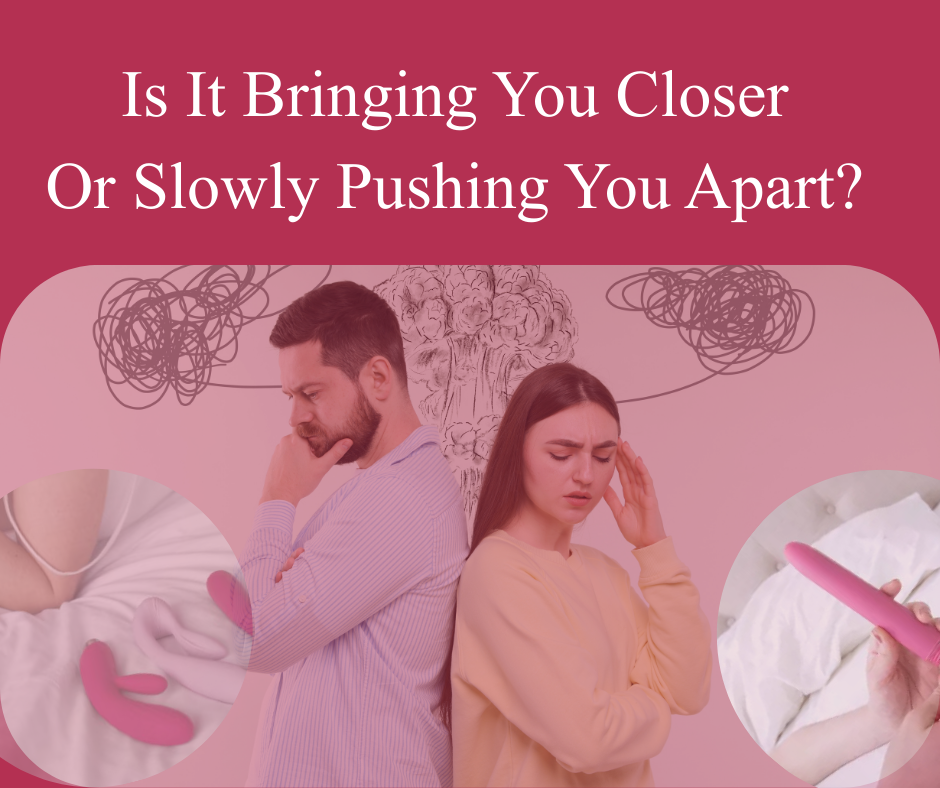
Perhaps the most emotionally complex disadvantage in this list is also the most underreported. Intimacy between partners is built on vulnerability, presence, and human connection — elements that no device can truly replicate. When sex toys begin to substitute for partner interaction, something precious can erode. Emotional closeness fades. Partners may begin to feel replaceable, inadequate, or disconnected, and relationship dynamics shift in ways that are difficult to articulate but deeply felt. What was introduced to bring two people closer together can, if left unaddressed, quietly build a wall between them instead.
Final Thoughts: Pleasure Should Never Come at a Hidden Cost
The conversation around sex toys has come a long way — from centuries of secrecy to mainstream acceptance — but one critical chapter remains dangerously unwritten: safety. Groundbreaking research from Duke University has revealed that most sex toys on the market shed harmful nano plastic fragments and contain phthalates at levels exceeding safety standards set for children’s toys, somehow these products remain almost entirely unregulated for adults. In the United States alone, nearly half of all adults use these products — trusting labels that science has already proven to be false. No government body is currently requiring safety testing. No labeling standards exist. The long-term effects on human health, fertility, and reproductive function remain, quite simply, unknown. As demand for sexual wellness products continues to grow, so does the urgency for honest regulation, transparent labeling, and informed consumer choices. Because at the end of the day, pleasure is a deeply personal right — but it should never quietly come at the cost of your health.